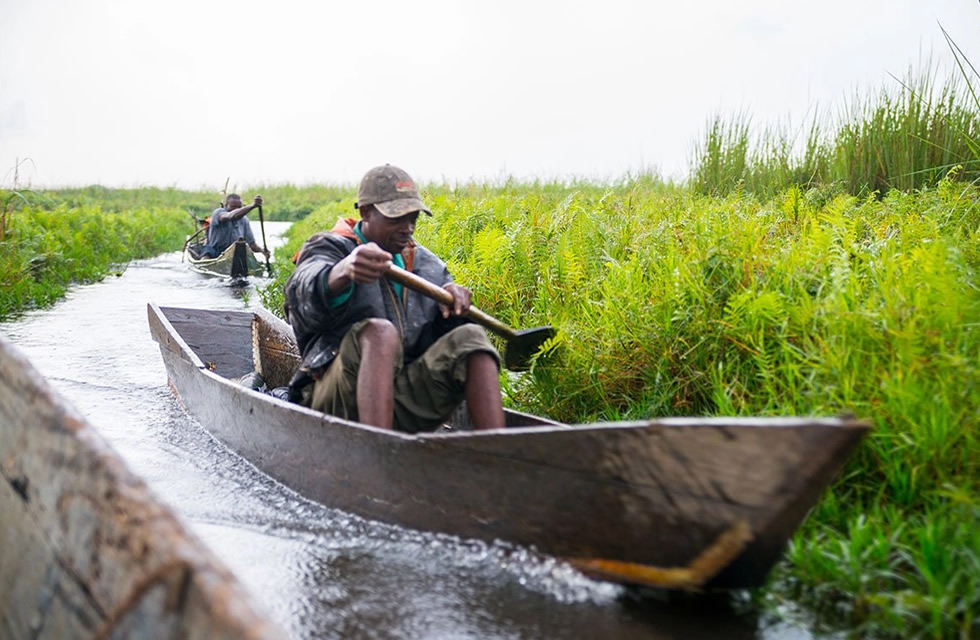


A subject close to the heart of this correspondent are all matters surrounding Uganda’s wetlands and forests, a key component for nature and wildlife based tourism, and a potential source of employment and cash flow for communities living near such ‘protected’ areas if given the right support and training to making a sustainable income from tourist visitors coming to see birds, the flora and fauna.
Recent extensive and severe flooding in low lying parts of the city are attributed to the destruction of wetlands and natural drainage areas leading towards Lake Victoria, a situation blamed on hapless city planners, ambitious politicians who in the past promised land to their voters and poor monitoring and enforcement by governmental bodies, agencies and authorities tasked with protecting wetlands, swamps and forested areas from encroachment and destruction.
Government did itself no favors in this regard with their on again / off again turnabouts when it became known that a quarter of the Mabira Forest; itself a major national water tower and rain catchment area; was to be given to a sugar company ‘for free’, while the very same company obstinately rejected proposals to lease land at commercial terms from landowners and farmers, as it did not suit their strategy to ‘own’ their cane plantations, even at the expense of destroying an intact tropical rain forest.
Magnificent Mabira was saved in the end, at the cost of lives during a pro Mabira demonstration in Kampala gone rowdy, saved at least for now as government still has to formally come out and announce that Mabira will be left alone in perpetuity, for the maintenance of bio diversity, its tourism values, as a ‘green lung’ only a short distance from an ever more industrialised and pollutive Kampala, as a water tower and catchment area feeding permanent rivers and releasing water into Lake Victoria and also as a source of biodiversity and being home to a multitude of birds, wildlife including primates, medicinal plants and a fauna generally considered as ‘extraordinary’.
A nature trail, visitor information centre, cycling trail and most notably the award winning ‘Rain Forest Lodge’ are now drawing in growing numbers of visitors, belying allegations by the proponents of the earlier ‘give away’ that tourism could never make up for the ‘gains’ which could be generated by growing sugar cane in this section of the forest. Of course, they also never allowed for the environmental value of an intact Mabira and its long term benefits for the people living nearby and even further away.
Other forests in the country however have lost huge areas to illegal logging too, which then paves the way for further illegal occupants trying their hand on farming, in the process destroying more forest land when they then cut more trees to grow their crops, after the erstwhile ‘farms’ have become unproductive and yielding little more after only two or three harvests.
Another increasing threat to forests and areas with extensive tree prevalence is the growing demand for charcoal and firewood. Many urban dwellers, unable to afford electricity connections, have to use firewood or charcoal for their daily cooking, but increased migration from the rural to urban areas has propelled the demand and prices for wood and charcoal over the past years have easily doubled if not tripled; yet this is still the cheaper option compared to the cost of metered electricity, which the majority of Ugandans simply cannot afford.
While NGO’s and related organisations have in the past propagated the use of solar cookers and technologically improved ‘jikos’ or charcoal burners, this had only a limited impact on the demand by fast growing populations.
Uganda has now entered a period in its history when the consumption of wood, for fuel and / or timber, has substantially outstripped the growing of new forests or re-forestation of commercially exploited acreage, and as mentioned in several previous related articles, a gloom and doom scenario is now coming across the horizon, whereby in another 30 or 40 years deforestation, if not halted now and reversed by proactive policies, might leave Uganda bare of major forests and prone to the advance of the desert belt, advancing South from the Sahara already in a vigorous fashion.
Data published in the local media speak of a massive loss of forest cover in areas near to Kampala and along the Entebbe; Kampala; Mukono; Jinja axis, where for instance the district of Wakiso, located between Kampala and Entebbe, has lost nearly 90 percent of the forests still seen some 20 years ago. Even Kibaale district, the home of the Kibaale Forest National Park, globally renowned for its primate populations, has lost half of its forest cover over the last 20 or so years, causing concern for conservationists and wildlife managers, but also tourism stakeholders, how to halt the trend and reverse it for the good of everyone. It was in fact in Kibaale where the National Forest Authority evicted hundreds of illegal squatters from forests under their jurisdiction last year, only to be told by politicians to tread softly, prompting a re-occupation of sections of those forests within hours after the statements were repeated through radio stations broadcasting to the area.
Districts along the route from Kampala to Kibaale i.e. Mityana and Mubende, too report a loss of forest cover of between 60 to 80 percent, alarming signals for government and its relevant organs that the time to act is now, or else all might be lost.
Turning to wetlands and the major drainage routes towards Lake Victoria.
The recent floods in the capital, caused as much by blocked drainage channels and poor maintenance from the city council as by building into former wetlands, have driven home a sharp message to those affected, the city fathers and government at large, that unless immediate counter measures are taken, this situation is going to prevail and likely worsen, as the changing weather patterns inflict more of the same on us.
Kampala, in the old days, was built like Rome on 7 major hills, and the low lying areas were avoided as they flooded easily during the rainy season, were generally swampy and drained the water away towards the lake. However, it is understood that during the dictatorial regime of the late Idi Amin caution and the wisdom of the elders was thrown into the wind, when major plans were unveiled to turn wetlands into industrial zones and open up such areas for the building of roads and houses. Once that precedent was set, there was seemingly no stopping further ‘developments’ thereafter, in particular as law and order, first during the anarchic rule and then the eventual overthrow of Amin and thereafter during the liberation war waged upon the subsequent dictatorships left the council’s enforcement arms toothless; unless clobbering defaulters of graduated tax payments that is; and the planning department of the city was being ignored, as most houses built then simply ignored the legal requirements to obtain planning permission and have their locations and architectural plans approved.
Until today in fact the city council continues to give title deeds and leases for areas recognized as wetlands, putting the lessees and owners then on collision course with such bodies as NEMA, itself often seen as a toothless dog, considering how little they in fact did over the past years to prevent the deep encroachment of the Konge wetland between the Kansanga and Bunga / Gaba area, inspite of many past emails and calls by concerned residents and passerby’s. The authority rather took on a few isolated and highly visible projects along the Kawuku part of Bunga, leaving itself open to criticism that they were selective and operating along non transparent guidelines singling out some while leaving others nearby untouched.
The emergence of flower farms too had an impact, along the shores of Lake Victoria between Kampala and Entebbe, where wetlands were encroached if not destroyed outright, denying migratory birds their perennial resting places and reducing sighted bird numbers; according to Nature Uganda and other similar organisations, including competent bird guides; by as much as 80 percent. Resorts and hotels were built into wetlands too along those shores, created on landfills, but to turn that clock back now is impossible, both in law and as a political reality, as none of those multibillion Uganda Shilling investments could now be ordered to remove from their sites.
Some areas of the lake are now showing increased levels of industrial pollutants and fertilizer run offs, large areas are covered by slimy algae and traditional breeding grounds of fish have become unsuitable for reproduction, leaving a question mark over the fish stocks in the lake, already considered at the brink after years of almost uncontrolled over fishing.
The national water company’s main water plant in Gaba has seen challenges arise from these developments too. The fluctuations in lake water levels made it necessary to put their water catchment points further and further out into the lake, and the pollutants found in the water have increased the required chemical input and subsequent cost by a multiple, so as to provide the city with safe drinking water, besides being unable to produce enough in the first place due to the explosion in population.
Many residents hence resort to wells and boreholes, safe until the mid 90’s but now also showing signs of increased pollution, putting the people using such water at risk of waterborne diseases but also leaving them with little choice as piped water is often not available everywhere in the city and its environs.
The shock of the recent floods have predictably left government in a flurry of activities, but only time will tell now if, and when, restoration of wetlands and the removal of illegal squatters and occupants will take place to let nature again take its original course.
A recent related report by this correspondent, where villagers in the North of the country got together to restore their nearby wetlands to mitigate the problems caused by over cultivation and growing of crops showed that it is possible to reverse the trend, but it takes not just the demands of the technocrats but political will and determination on a country wide scale, to save the future of the nation.
Across the border, similar debates are raging over the Mau forest, and other forests too which were over exploited, and there as here it is the lack of political will and determination which has been the biggest hindrance so far. The next generations will not thank us, the present custodians of our natural endowments, if we let our environment go to the proverbial dogs, so it up to us and our present day political leaders to look beyond the next election cycles and do what is necessary to protect and restore our forests and wetlands.
The regional tourism industry depends on it today and tomorrow, but the country and our grand children and great grand children depend on action today, tomorrow and the days after, and if we fail them today we fail them forever, as this might indeed by our last chance to play our part in the global scheme of climate change and ‘wild weather’ as we can see it unfold across the globe. It is not enough to have made very justified noise in Copenhagen and preparing for more such noise in Mexico at the next round of climate talks, if we are not able to put our own houses here in East Africa in order first.
I congratulate the Rwandans for their determined efforts to restore forests across the ‘land of a thousand hills‘ and I encourage Uganda, Kenya, Tanzania, Burundi, the Southern Sudan and Ethiopia to do likewise and set an example for our brothers in Southern Africa and elsewhere on the continent. Reforestation now should be our demands to the political leaders ahead of whenever our next elections are taking place, restore wetlands, commit to best environmental practices and safeguard our future and the future of the coming generations. That should be a legacy any political hopeful ought to underwrite.