

The tourism sector, organic farming industry, and ecology are converging into a business model to market Uganda as a tourist destination and promote better nutrition.
Under the project dubbed NISAT (Network for Innovation and Sustainability in Agriculture and Tourism), the program mainly targets young small-scale entrepreneurs from any of the three areas and encourages them to add new activities from the others.
In April last year, the Embassy of France partnered with Stanbic Bank’s Business Incubator in a two-year project worth 1.88 billion shillings to promote entrepreneurship in Agro-ecology and eco-tourism in Uganda.
They were joined by the National Organic Agriculture Movement of Uganda, NOGAMU, and the Uganda Tourism Board, to mobilize and train qualifying entrepreneurs under the NISAT program.
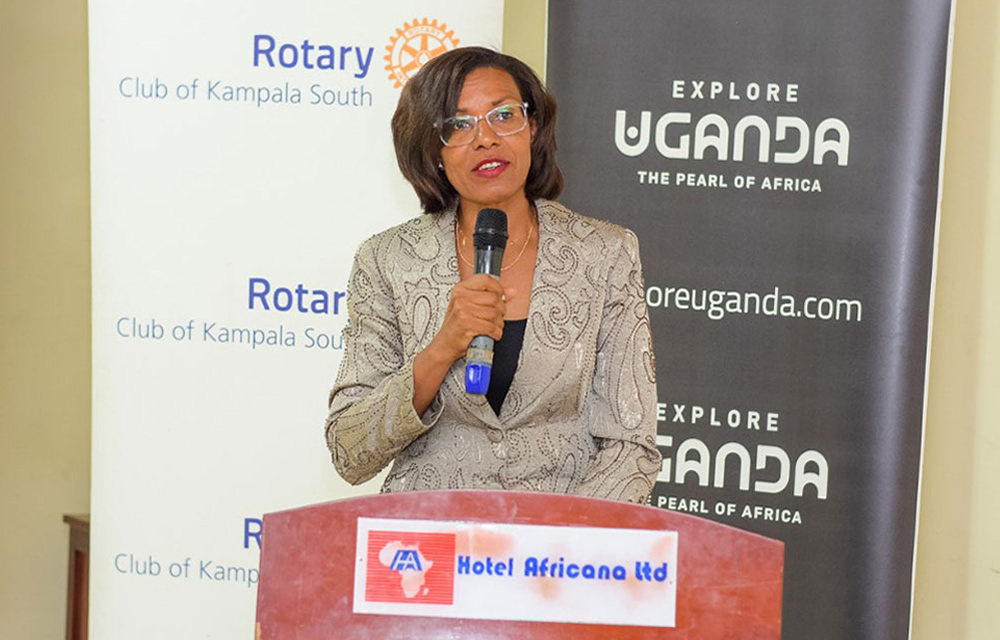
UTB Executive Director, Lillian Ajarova, said one of the best outcomes of the program is helping the beneficiaries formalize their businesses, which earns them recognition in government programs.
The entrepreneurs include farmers, tour operators, agro-processors, and exporters, among others.
The 120 beneficiaries who were commissioned on Friday will also remain networked, especially in the marketing of their tourism products, and access to government and other assistance, among others.
The cohort leader, Sandra Ejang says the networking will help them participate in international trade fairs, and penetrate local and foreign tourism markets, among other activities and programs.
The training involved business management skills, production skills, and marketing, but also involved taking the beneficiaries to different parts of the country to appreciate the different aspects from which they could develop ideas.
Adrine Namusoba, a vegetable farmer and proprietor of Musoli Eden Farm says over the period she has been under the NISAT initiatives, she has managed to access the horticulture market in Europe and that her orders are increasing.
The training program involved seven modules that facilitators say have proven to be overwhelmingly successful and some of the results include about 90 percent of beneficiaries getting connected to digital network platforms.
One of the beneficiaries, Mutamba Rubagira of Rada Tours started by organizing a trip with his fellow Uganda Martyrs University students to Kalangala, and after its success, he decided to organize more of them.
Out of it, he has now expanded to other universities. He has also developed an app to ease marketing, bookings, and reservations, for which he has applied for licensing from the Bank of Uganda under the National Payments System.
Chariton Namuwoza, the Chief Executive Officer, of NOGAMU, says this initiative will help their bid to increase organic production in the country, and also enhance its international position as an organic production country.
He says there are many challenges facing organic farming including the lack of enough market outlets and the costs of certifying their products, especially for the sake of the global market, among others.
The target beneficiaries of NISAT are youth aged between 18 to 35 and women of all ages provided they fulfill the criteria set aside for the beneficiaries.
It is hoped that this will be achieved by promoting skills development and building strong and sustainable networks amongst the target beneficiaries.
Speaking at the pass-out, Tony Otoa, Chief Executive of the Stanbic Business Incubator, said after graduation, the beneficiaries will not be left alone but will continue to be nurtured by the facilitators.
He hailed the women, youth, and others who managed to start businesses during the Covid-19 pandemic, adding that the situation helped many people get and develop ideas, though existing businesses were collapsing.
The program is also expected to be a booster to the environment preservation efforts, in line with the global campaign against climate change and global warming.
“Today, most investment funds worldwide are looking out for individuals, companies, and organizations that incorporate Environmental, Social, and Governance (ESG) provisions in their business models. NISAT has been a key factor in training participants to embrace them (ESG) in order to tap into the opportunities,” says an introductory statement to NISAT.
Yves Mercier, the Counselor for Cooperation and Cultural Affairs at the Embassy of France to Uganda, said their involvement is driven by the basis of the cooperation between his country and Uganda regarding the youth, women, and environment.
He hoped that this initiative would grow big enough to attract large international financial programs that the French government conducts.