As Uganda heads toward the highly anticipated January 15th 2026 general elections, debate and uncertainty continue to grow around the issue of internet access, digital freedoms, and state control of communication. In recent days, widespread rumors circulated on social media suggesting that the Ugandan government planned to shut down the internet, mobile money services, and banking systems during the election period. However, senior government officials have strongly denied these claims, describing them as false, fabricated, and misleading.
The issue has sparked intense public discussion, especially given Uganda’s history of internet blackouts during past elections. While authorities insist that no shutdown is planned, skepticism remains high among citizens, opposition leaders, civil society organizations, and digital rights activists.
Government Rejects Shutdown Claims
The Permanent Secretary of the Ministry of ICT and National Guidance, Dr. Aminah Zawedde, moved quickly to dismiss reports of a planned internet shutdown. Speaking to the media, Dr. Zawedde stated clearly that the government has not issued any orders, directives, or plans to disrupt internet services, mobile money platforms, or banking systems ahead of or during the elections.
She described the widely shared notice alleging an impending shutdown as fake and fabricated, warning the public against spreading unverified information that could cause unnecessary fear and panic.
According to Dr. Zawedde, the government remains committed to digital inclusion, economic stability, and uninterrupted communication, especially at a time when digital services play a critical role in daily life, business transactions, and access to information.
Media Guidelines and Online Conduct
While rejecting claims of an internet shutdown, the government emphasized that media guidelines will be strictly enforced during the election period. Dr. Zawedde clarified that live broadcasting or online streaming of riots, violent incidents, hate speech, or unverified election results is prohibited.
She explained that such restrictions are not meant to suppress freedom of expression, but rather to prevent panic, misinformation, and chaos, especially in a tense electoral environment.
“These guidelines are aimed at protecting public order and national stability,” she said, urging journalists, bloggers, and social media users to act responsibly.
UCC Also Denies Knowledge of Shutdown
The Uganda Communications Commission (UCC) has also dismissed speculation about an internet blackout. The UCC Executive Director, Nyombi Thembo, stated that he has not received any instruction or communication from the government directing the commission to prepare for a shutdown.
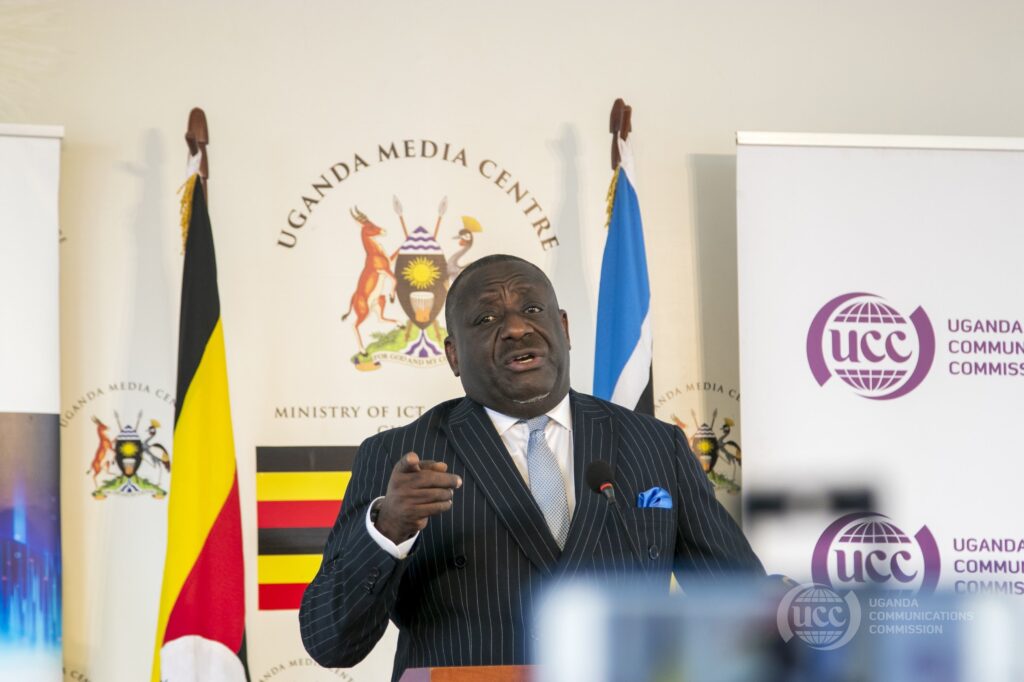
According to Nyombi Thembo, any decision affecting national communication infrastructure would require formal procedures and official communication, none of which have occurred.
His remarks were meant to reassure the public and counter growing fears fueled by statements allegedly made elsewhere in government.
Conflicting Statements Fuel Confusion
Despite official denials, confusion deepened after reports emerged that the Speaker of the Parliament of Uganda had been heard in Parliament suggesting that the internet would be shut down during the election days. Although no formal directive followed, the statement intensified public suspicion and debate.
The contradiction between parliamentary remarks and official denials from the Ministry of ICT and UCC has left many Ugandans uncertain about what to expect.
For many citizens, the question is not just what officials are saying now, but what history suggests might happen.
Uganda’s History of Internet Blackouts
Uganda has a clear record of internet shutdowns during previous elections, most notably in 2016 and 2021. In both cases, authorities ordered nationwide blackouts, citing national security concerns. Social media platforms were blocked, and internet access was either fully or partially disabled.
These shutdowns had major consequences:
Businesses lost millions of shillings
Mobile money services were disrupted
Journalists and election observers were cut off
Citizens were unable to access real-time information
Because of this history, many Ugandans find it difficult to fully trust assurances that the internet will remain open this time.
As one digital rights advocate noted, “The doubt does not come from nowhere. It comes from experience.”
Starlink Controversy and Opposition Reaction
The debate took a new turn with the involvement of Starlink, the satellite internet service owned by American billionaire Elon Musk.
Robert Kyagulanyi Sentamu, popularly known as Bobi Wine, the president of the National Unity Platform (NUP) and a leading opposition figure, claimed that Starlink devices operating in Uganda had been disabled and banned just days before the election.
In a widely shared message on social media platform X (formerly Twitter), Bobi Wine appealed directly to Elon Musk, asking him to intervene.
He accused the Ugandan government of deliberately restricting access to alternative internet services to limit communication, organization, and free expression during the election period.
Bobi Wine’s Message to Elon Musk
In his message, Bobi Wine wrote that while Elon Musk celebrates the fall of dictatorship elsewhere, Ugandans are facing similar repression at home. He argued that disabling Starlink denies citizens the ability to communicate freely at a critical moment in their democratic process.
He further accused the government of:
Suppressing free expression
Brutally persecuting opposition figures
Engaging in mass human rights abuses
Using digital control to weaken democratic participation
“Democracy dies in darkness,” Bobi Wine concluded, urging Musk to reactivate Starlink internet access in Uganda.
Government Silence on Starlink IssueAs of now, the Ugandan government has not issued a detailed public explanation regarding the status of Starlink operations in the country. While authorities maintain that no general internet shutdown is planned, questions remain about alternative internet providers and whether regulatory actions are being selectively applied.
This silence has only added to public suspicion and speculation.
Election Tensions and Political Climate
The January 15 elections come at a time of heightened political tension. President Yoweri Kaguta Museveni, who has been in power for nearly 40 years, is seeking another term.
The opposition argues that the political environment is unfair, pointing to:
Arrests of opposition supporters
Restrictions on rallies
Heavy security presence
Control of media and online spaces
The government, on the other hand, insists that it is maintaining law and order and ensuring peaceful elections.
Digital Rights and Democracy
The issue of internet access has become a core democratic concern in Uganda. In today’s world, the internet is not just a communication tool it is essential for:
Civic participation
Election transparency
Independent journalism
Economic activity
Citizen mobilization
Any disruption, whether total or partial, has far-reaching implications beyond politics.
Human rights organizations argue that internet shutdowns violate freedom of expression, access to information, and economic rights. They warn that even the threat of a shutdown can create fear and self-censorship.
Public Skepticism Remains
Despite firm denials from Dr. Aminah Zawedde and Nyombi Thembo, many Ugandans remain unconvinced. Social media discussions show a mix of hope, doubt, and frustration.
Some citizens say they will only believe the assurances if the internet remains fully operational on Election Day. Others are preparing alternative communication methods, fearing a repeat of past experiences.
As Uganda approaches Election Day, the internet shutdown debate has become a test of trust between the government and citizens.
If the internet remains open, it could mark a significant shift toward greater transparency and digital freedom. If it is shut down, it will likely deepen mistrust and reinforce long-standing concerns about democratic space in the country.
For now, Ugandans wait, watch, and hope that this election will be different not just in words, but in action.
One thing is clear: the role of the internet in Uganda’s democracy has never been more important.