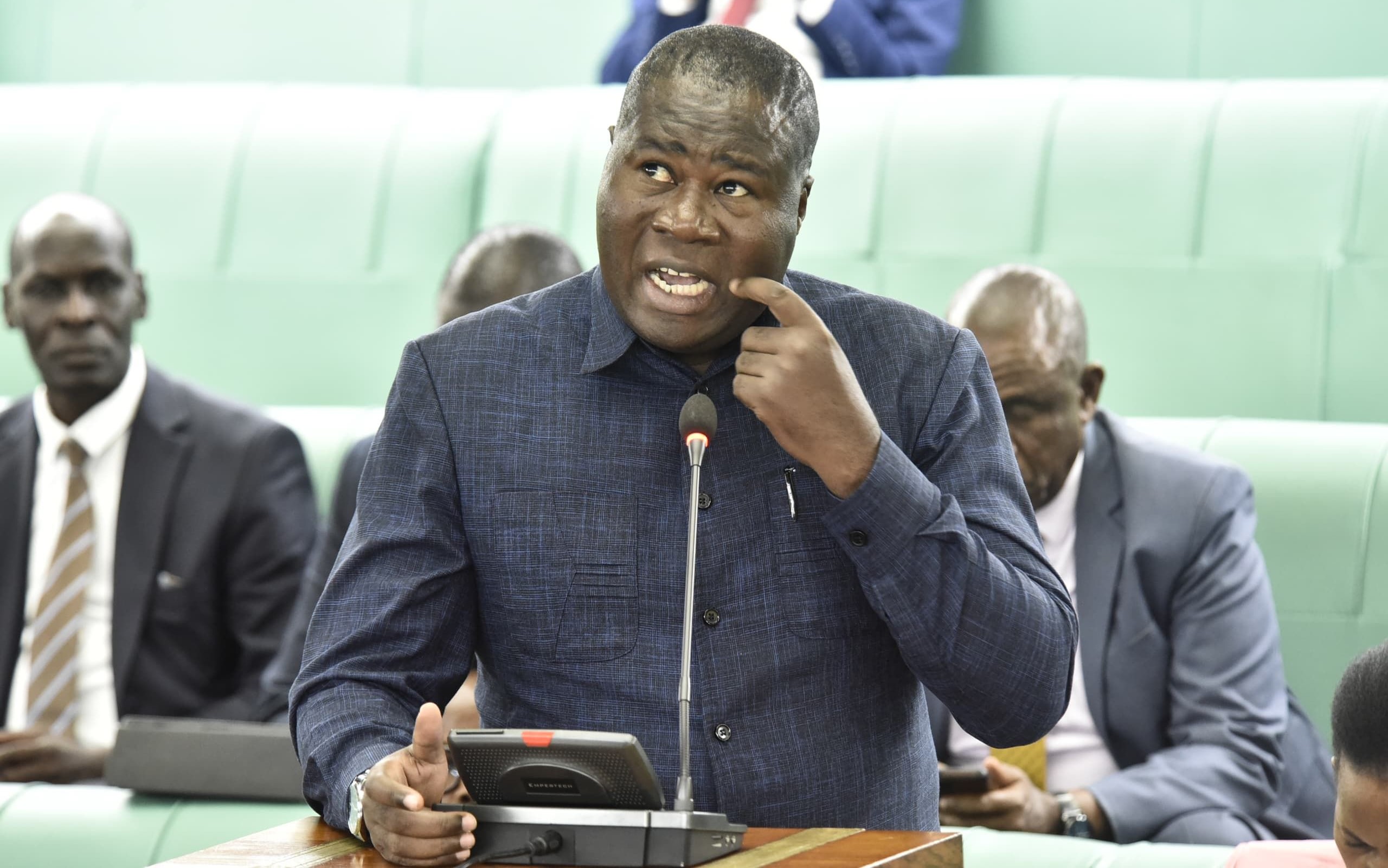


The theatre of Uganda’s Parliament has always been a stage for high-stakes drama, but the transition from the 11th to the 12th Parliament delivered a plot twist that few saw coming. In a stunning reversal of fortune, the woman who once commanded the Speaker’s chair, Rt. Hon. Anita Annet Among, was swept out of power. In her place, the lawmakers have installed a soft-spoken lawyer and intellectual property expert, Rt. Hon. Jacob Marksons Oboth-Oboth, as the new Speaker of the 12th Parliament.
This is the story of how a political “golden girl” fell from grace banished by her own party, shamed by corruption scandals, and ultimately abandoned by the very power structures that lifted her up.
The Final Ousting Among’s Sudden Fall
For five years, Anita Among held the third-highest office in the land. But in the hallways of power, loyalty is fleeting. After just one term as the head of the legislature, she was unseated in a dramatic election held at the Kololo Ceremonial Grounds in Kampala on May 25, 2026. It was a race she was expected to win, yet she spectacularly lost. In a shocking twist, Jacob Oboth-Oboth, the West Budama Central County legislator, won the contest convincingly with 441 votes, trouncing National Unity Platform’s Paul Mwiru (60 votes) and DP President Norbert Mao (15 votes). The biggest shock? Anita Among withdrew from the race entirely, pulling out as corruption investigations closed in on her.
The “Golden Age” That Wasn’t: Why the Party Turned on Among
Observers recall that the fall of Anita Among was not a sudden accident it was a long time coming. The cracks began to show when her own political party, the National Resistance Movement (NRM) the same party that nominated her turned its back on her. The hostility was rooted in corruption allegations that had plagued her tenure, particularly the infamous Karamoja iron sheets scandal, where relief items meant for vulnerable people ended up on the roofs of politicians and, allegedly, in the hands of the Speaker herself.
Beef for the Ages Kadaga vs. Among
To understand why Among fell, we must revisit the fiery rivalry between her and her predecessor, Hon. Rebecca Kadaga.
Kadaga, the former Speaker and a titan of Ugandan politics, never hid her disdain for Among. In a stinging remark that became a national talking point, Kadaga allegedly questioned, “How can someone just become a Muslim and be voted as an Imam of the mosque?”—essentially ridiculing the idea of the NRM trusting a recent defector from the rival FDC party with the Speaker’s seat.
The infighting was so intense that Kadaga reportedly boycotted parliamentary sessions entirely during Among’s tenure. The two camps clashed openly, even in the presence of President Yoweri Museveni. Among, confident in her strategy, declared she was bringing “fresh progress” to the party. Kadaga disagreed fiercely. Among then vowed to uproot Kadaga’s political base in Busoga a war that consumed the ruling party for months.
The Iron Sheet Scandal That Stuck
The undeniable turning point was the “Iron Sheet Scandal.” The government had procured thousands of iron sheets to construct shelters for vulnerable people in the Karamoja sub-region. Instead, an official report revealed that the sheets were diverted Speaker Anita Among, the Prime Minister, and several Cabinet members were implicated in the illegal distribution of the aid.
While the country descended into political unrest and accusations of embezzlement, the wheels of justice turned slowly. As is often said in Uganda, “The law only catches the weaker ones.” Indeed, it was Minister Agnes Nandutu who was arrested, publicly tried, and eventually handed a four-year jail sentence for dealing with suspect property in this saga. Meanwhile, the “big names” implicated alongside Among faced little to no immediate prison time.
The Weapon of Mass Destruction: Social Media and the “If we manage to this…” Video
In the modern era, social media is a double-edged sword. For Anita Among, it became a weapon of mass destruction. A viral video circulated across WhatsApp and X (formerly Twitter) showing the Speaker at a function in her home area of Bukedea. In the audio, she was caught allegedly saying: “If we manage to do this… how about we get power?”
Although the context was debated, the implication was catastrophic. Political analysts immediately jumped on the phrase, arguing that it implied Among was building a political empire to rival her superiors and possibly target the presidency. This single soundbite is widely believed to have sealed her fate with the “bosses” she was accused of trying to outshine.
“Never Outshine Your Master”: The Unwritten Rule
As Ugandans dissected the downfall, a golden rule of power emerged: Never outshine your master.
Among made a fatal mistake. She became known for flashy wealth allegedly spending billions of shillings on personal and occasional matters. Her management of Parliament was reportedly running at nearly three times the budget that Kadaga had used, raising flags in the corridors of the State House. When President Museveni reportedly questioned how she was running the house, it became evident that the President had lost confidence in her leadership.
The Final Nail in the Coffin-Kabanda, Muhoozi, and the PLU
Just days before the parliamentary vote, the political temperature spiked. The Patriotic League of Uganda (PLU), a pressure group chaired by the First Son and Chief of Defence Forces, General Muhoozi Kainerugaba, dropped a bombshell.
David Kabanda, the Kassanda MP and PLU Secretary General who had been seen as a friend to Among, issued a terse press release. He declared that while the PLU had initially backed Among for Speaker, they were immediately withdrawing their support. The statement read with cold finality: “We dismiss that and we will not vote for her.”
Without the backing of Muhoozi’s political machine, Among’s political life support was cut. Shortly after, Gen. Muhoozi publicly endorsed Jacob Oboth-Oboth for Speaker. The tide had turned. Among was isolated, bound to fall.
Who is Jacob Oboth-Oboth?
Stepping into the chaos is the new Sheriff, Rt. Hon. Jacob Marksons Oboth-Oboth.
Born on April 13, 1971, in Tororo District, Oboth-Oboth is a seasoned lawyer and intellectual property expert. Unlike the flamboyant Among, he is described as “soft-spoken” and resilient. He holds a Master of Laws from the University of Minnesota and has spent years navigating the legal corridors of the Ministry of Justice. He entered politics as an Independent MP for West Budama South in 2011 and survived tough court challenges to become a veteran legislator.
In a striking moment of contrast, upon his election, Oboth-Oboth did not brag about wealth or political warfare. Instead, he looked Parliament in the eye and pledged to lead a corruption-free house. “I pledge a corruption-free Parliament,” he said in his maiden speech, vowing to embrace integrity and accountability.
The political maneuvering in the ruling party left opposition MPs baffled. Outgoing Kira Municipality MP Ibrahim Ssemujju Nganda, known for his sharp tongue, mocked the NRM legislators with a memorable analogy. He remarked that “NRM Members of parliament are like nursery children. You see how they celebrated the voting of Jacob Oboth Oboth upon becoming the speaker, and yet they’ve been hyping the outgoing speaker as their chosen one. You wonder.” His statement highlighted the sometimes fickle nature of NRM voting blocs, who will follow the wind of the party’s latest directive without hesitation.
In one of the most bizarre moments of the Speakership nomination, an opposition MP added a layer of satire to the proceedings. Kiruruta Nkeretanyi Yusuf, the youthful NUP MP from Masaka, shocked the floor by nominating President Museveni’s younger brother, Godfrey Aine Kaguta (commonly known as Sodo), for the Deputy Speakership. The nomination was technically invalid as it lacked a seconder, but Nkeretanyi later clarified that it was a sarcastic political stunt to highlight the level of nepotism in Ugandan politics. He argued that since the First Family already controls the major arms of government, they might as well take the Speaker’s chair too.
This political earthquake did not happen in a vacuum. Since the 1995 Constitution was promulgated, the Ugandan Parliament has been a body of constant flux. Over the years, the Constitution has been amended numerous times to suit the political realities of the day. The most controversial amendments came in 2005 and 2017. The 2005 amendment removed presidential term limits, allowing Yoweri Museveni to run for office indefinitely. Then, in 2017, Parliament passed a chaotic amendment to remove the age limit cap, which would have barred the elderly Museveni from running after age 75. The passage of the latter saw plain-clothed soldiers deployed in the chambers to eject dissenting MPs a moment many point to as the death of parliamentary independence.
Museveni’s Seven Tenures Forty Years and Counting
To understand the Parliament, you must understand the man who towers above it all: President Yoweri Kaguta Museveni. Seizing power in 1986 after a brutal guerrilla war, Museveni famously remarked that “the problem of Africa in general, and Uganda in particular, is not the people but leaders who want to overstay in power.” Ironically, as of the 2026 elections, Museveni has secured a seventh term in office, ruling for over 40 years. The former revolutionary has become the longest-serving leader in the country’s history, fusing the state and the ruling NRM party into a single, unshakeable entity.
Political Arena without Heroes
As the 12th Parliament begins, Uganda stands scratching its head. Who is real corrupt? Anita Among? Or the “bosses” who sanctioned her rise and then ordered her fall? The public may never know. Deputy Speaker Thomas Tayebwa was retained alongside Oboth-Oboth. Was he unaware of the controversial bills and corrupt embezzlement of funds happening under Among’s nose? That remains a question mark for the new term.
Among is currently being probed for illicit enrichment and money laundering, and her political future remains shattered. For now, the political winds of Uganda have settled on Jacob Oboth-Oboth a lawyer tasked with cleaning a house that has been set ablaze. Whether he can succeed where Among failed will define the next five years of the Pearl of Africa.