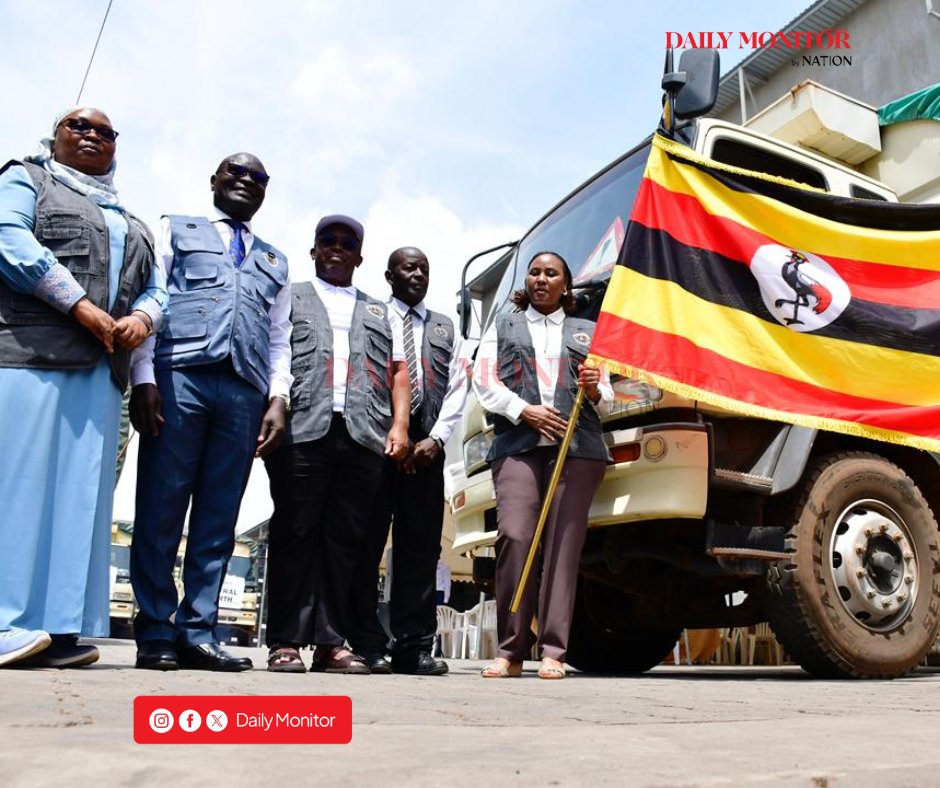


The Chairperson of the Electoral Commission (EC), Justice Simon Byabakama, together with other Commission members, has arrived at the EC warehouse in Ntinda to officially flag off the dispatch of voting materials across the country.
The materials being dispatched include ballot papers, biometric voter verification machines, and other essential polling-day equipment. These materials will be transported to different districts and polling stations as Uganda prepares for the general election scheduled for January 15, 2026.
Justice Byabakama said the early distribution of materials is meant to ensure a smooth, transparent, and timely voting process. He assured Ugandans that the Commission is committed to delivering a free and fair election and urged all stakeholders to cooperate with election officials.
Security agencies are expected to escort the materials to ensure their safety and prevent any interference. The Electoral Commission has also called on election officials at all levels to strictly follow procedures while handling the materials.
Eight Candidates in the Presidential Race
The 2026 presidential election has attracted eight candidates, reflecting a competitive political environment.
President Yoweri Kaguta Museveni, the candidate of the National Resistance Movement (NRM), is seeking another term in office. Museveni has been Uganda’s president since 1986 and is campaigning on his record of security, infrastructure development, and economic transformation.
Kyagulanyi Robert Ssentamu, popularly known as Bobi Wine, is contesting under the National Unity Platform (NUP). He remains one of the strongest opposition challengers, drawing significant support from young voters and urban communities.
Nandala Mafabi James Nathan, representing the Forum for Democratic Change (FDC), is also in the race. He has campaigned on issues of governance, accountability, and economic reform.
Former army commander Mugisha Gregory Muntu Oyera is standing as the presidential candidate for the Alliance for National Transformation (ANT). Muntu has emphasized institutional reform, professionalism, and national unity in his campaign.
Kasibante Robert, the candidate of the National Patriotic Party (NPP), is seeking to offer an alternative political voice, focusing on social justice and national development.
Mabirizi Joseph, contesting under the Conservative Party (CP), has highlighted constitutionalism, rule of law, and electoral reforms as key pillars of his campaign.
Munyagwa Mubarak Sserunga, representing the Common Man’s Party (CMP), has positioned himself as a voice for ordinary Ugandans, particularly those affected by unemployment and rising living costs.
Bulira Frank Kabinga, the candidate of the Reform Party of People (RPP), has also joined the race, campaigning on reforms aimed at improving governance and public service delivery.
Uganda’s 2026 general election is expected to be highly competitive. The main contenders include National Unity Platform (NUP) leader Robert Kyagulanyi, popularly known as Bobi Wine, and the National Resistance Movement (NRM) candidate and incumbent President Yoweri Museveni.
President Museveni, who has ruled Uganda since 1986, is seeking another term in office. On the other hand, Kyagulanyi represents a youthful and opposition-led challenge, especially popular among young voters and urban populations.
As preparations intensify, political parties have increased their campaigns across the country, while voters are being encouraged to turn up in large numbers to exercise their democratic right.
The Electoral Commission has reminded voters to verify their polling stations, follow election guidelines, and maintain peace before, during, and after the election.
PHOTOS: Electoral Commission Chairperson, Justice Simon Byabakama, flanked by other Commission members, has arrived at the EC warehouse in Ntinda to flag off the dispatch of voting materials, including ballot papers and biometric machines to different parts of the country ahead… pic.twitter.com/zOR5zYYHYy
— Daily Monitor (@DailyMonitor) January 8, 2026
Uganda now enters the final stretch toward the January 15 polls, with all eyes on how the Electoral Commission will manage the process and how voters will shape the country’s political future.